4.7
607 Reviews
Flooring Arizona since 1945!
4.7/5


Professional Installation

Educated Consultants

4.7
607 Reviews
4.7/5
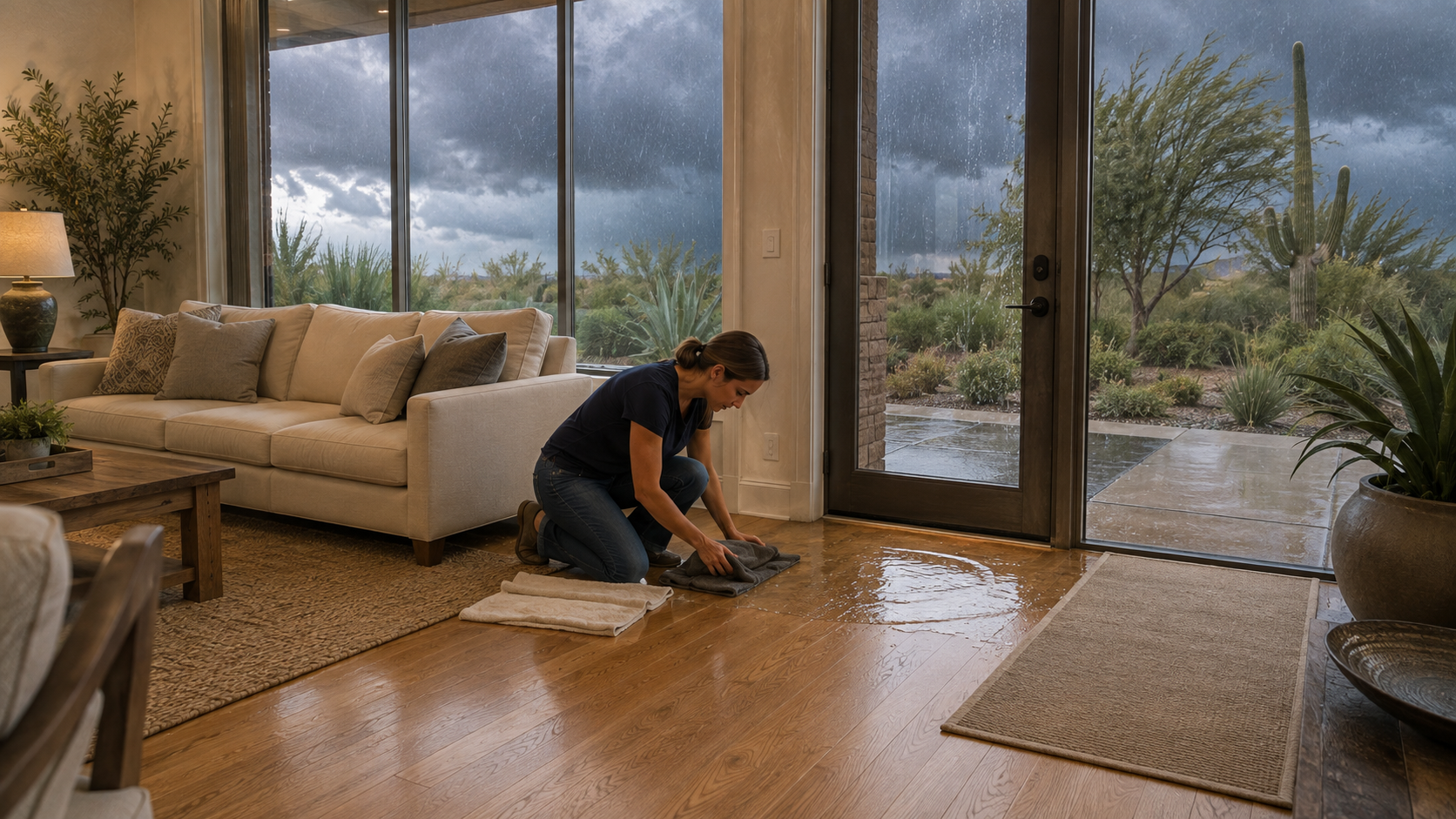
Arizona's monsoon season brings dramatic skies, heavy downpours, and, unfortunately, the occasional flooded room. When water finds its way inside, your floors are often the first casualty. A water damage floor problem can start small and quickly turn into warping, staining, or mold if it is not handled fast. Knowing how water affects different floors and what to do the moment it happens can save you money and stress. Here is what every homeowner should understand before the next storm rolls in.
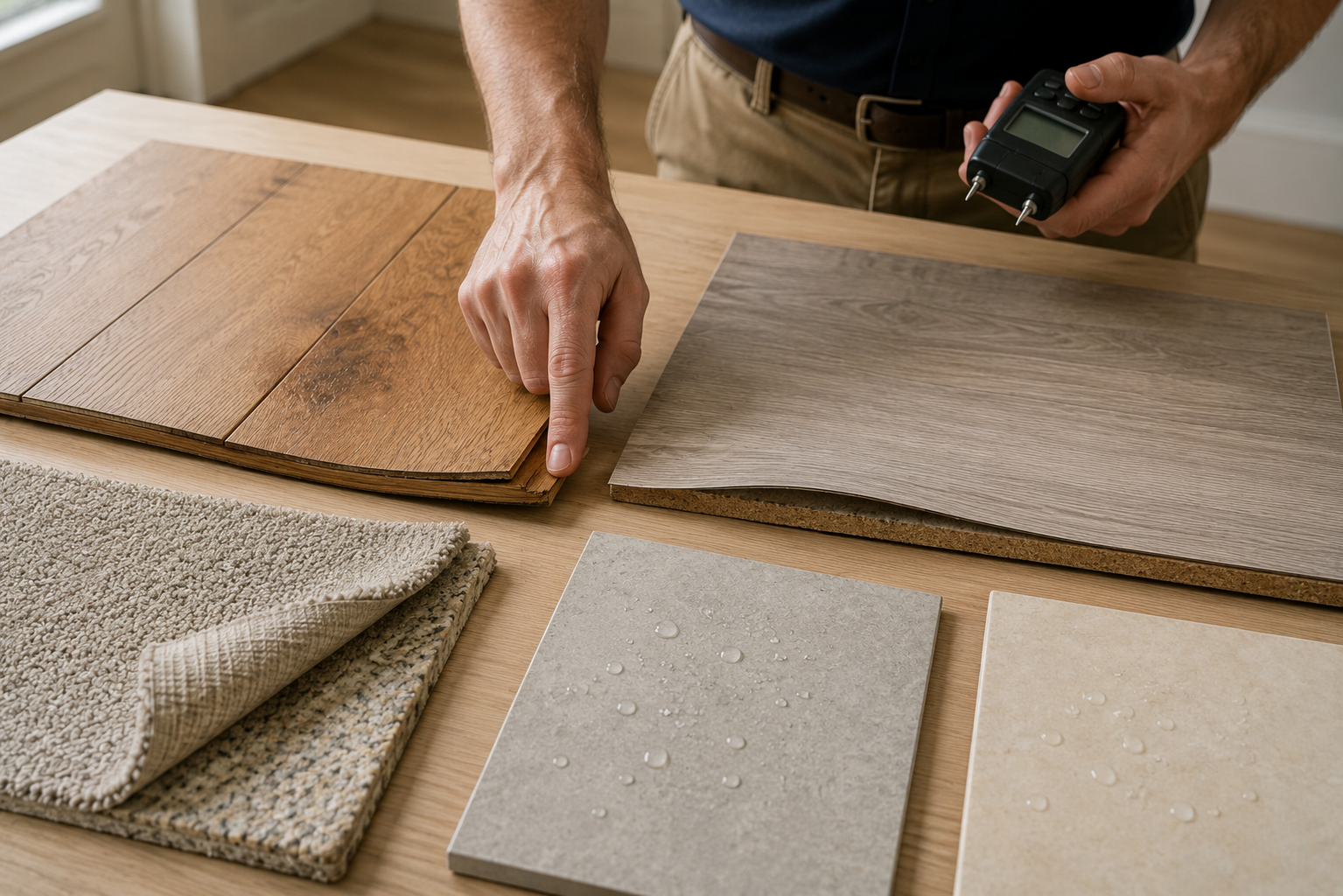
Water is patient, and that is the problem. It seeps into seams, soaks into subfloors, and works its way beneath the surface where you cannot see it. Over time, trapped moisture causes boards to swell, cup, or buckle, and it creates the damp, dark conditions that mold loves. The longer water sits, the more damage it does, which is why a quick response matters so much.
Before you clean up or repair anything, identify and stop the source of water. During monsoon season, that might be rain blowing in through a door, a roof leak, or water pooling near a foundation. It could also be an unrelated issue, such as a burst pipe or an overflowing appliance. Repairing a floor while water is still coming in only wastes time and money, so fixing the leak always comes first.
Not every floor reacts to water the same way, and your type of flooring makes a big difference.
Hardwood is the most vulnerable. A real hardwood floor absorbs moisture readily, which leads to cupping, warping, and dark stains. Fast drying can sometimes save it, but standing water is a serious threat.
Laminate is also at risk. Its core is made of compressed wood fibers, so once water gets past the surface, the planks tend to swell and cannot be restored.
Carpet does not warp, but it holds water like a sponge. If it is not dried quickly, the padding underneath can trap moisture and grow mold.
Tile and luxury vinyl are the champions here. Both resist water well, which makes them smart choices for kitchens, bathrooms, and other rooms prone to spills or flooding.
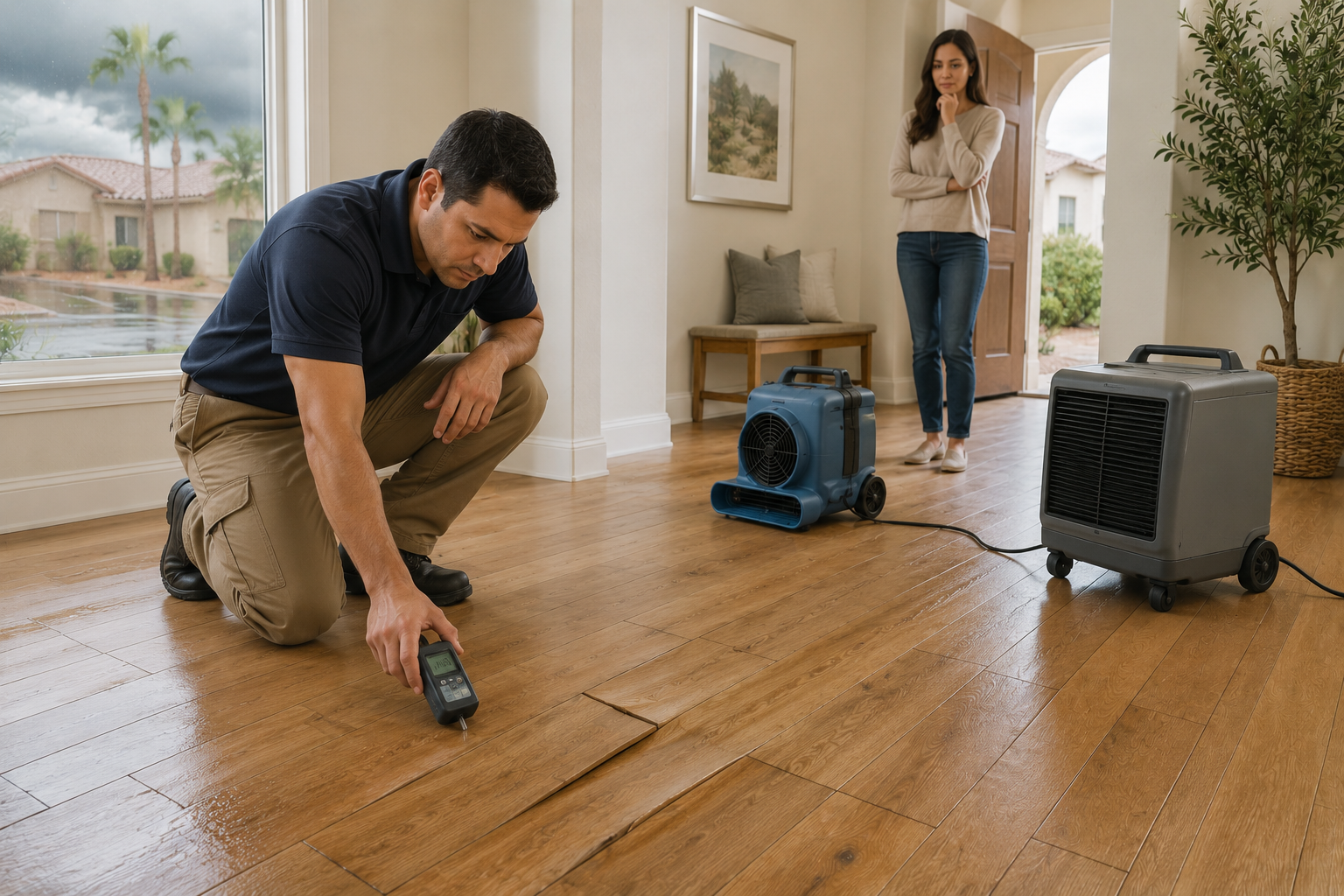
Sometimes, yes, and it depends on how much water there was and how long it sat. Minor moisture that is caught and dried within a day or two can often be reversed, especially on solid hardwood, which can be sanded and refinished. Deeper or longer-lasting damage is harder to undo. When boards are badly warped, when laminate has swelled, or when mold has taken hold, replacement is usually the safer and more cost-effective route. If you are unsure, it is worth having a professional assess whether your floor is truly water damaged beyond repair.
A little preparation goes a long way. Check that your roof, windows, and door seals are in good shape before the storms arrive, and keep water away from your foundation with proper drainage. Place mats at entryways to catch tracked-in rain, and clean up spills quickly. If a room is especially prone to moisture, consider switching to a water-resistant option. The experts at Baker Bros can help you compare durable choices like luxury vinyl and tile that stand up to Arizona weather.
Sometimes. If the water is dried within a day or two, a solid hardwood floor can often be sanded and refinished. However, if the boards have cupped, buckled, or stayed wet for long, replacement is usually the better option. A professional can tell you which path makes sense.
As fast as possible. The first 24 to 48 hours are critical. Remove standing water, dry the area thoroughly with fans and dehumidifiers, and stop the source of water. Quick action gives you the best chance to save your floor and prevent mold from taking hold.
Tile and luxury vinyl are the top choices for resisting water. Both hold up well in kitchens, bathrooms, and other areas that see spills or moisture. If you live somewhere prone to flooding, these options offer real peace of mind during monsoon season.
Watch for a musty smell, discoloration, or soft, warped spots on the floor. Mold often grows out of sight, beneath the surface or in carpet padding, so if you suspect it, have a professional inspect the area. Mold is a health concern and should be handled promptly.
It depends on the severity. Light, quickly dried damage can often be repaired, while badly warped, swollen, or moldy floors usually need to be replaced. Weighing the cost of repair against replacement, with expert input, will help you make the right call.
Monsoon season is a fact of Arizona life, but ruined floors do not have to be. Stop leaks early, act fast when water appears, and choose water-resistant flooring in the rooms that need it most. Whether you're replacing water-damaged flooring or planning an upgrade, visit Baker Bros at one of their six showrooms for expert advice and durable flooring options.
Reviewed By: Phil Koufidakis, President at Baker Bros Area Rugs and Flooring
Phil Koufidakis has spent more than 25 years helping Arizona homeowners find the right flooring for their homes. As President of Baker Bros Area Rugs and Flooring, he brings decades of hands-on experience and industry knowledge.
Stay informed, get inspired, and be the first to know about promotions – subscribe now!
By subscribing, you agree to our Privacy Policy.

.avif)