4.7
607 Reviews
Flooring Arizona since 1945!
4.7/5


Professional Installation

Educated Consultants

4.7
607 Reviews
4.7/5
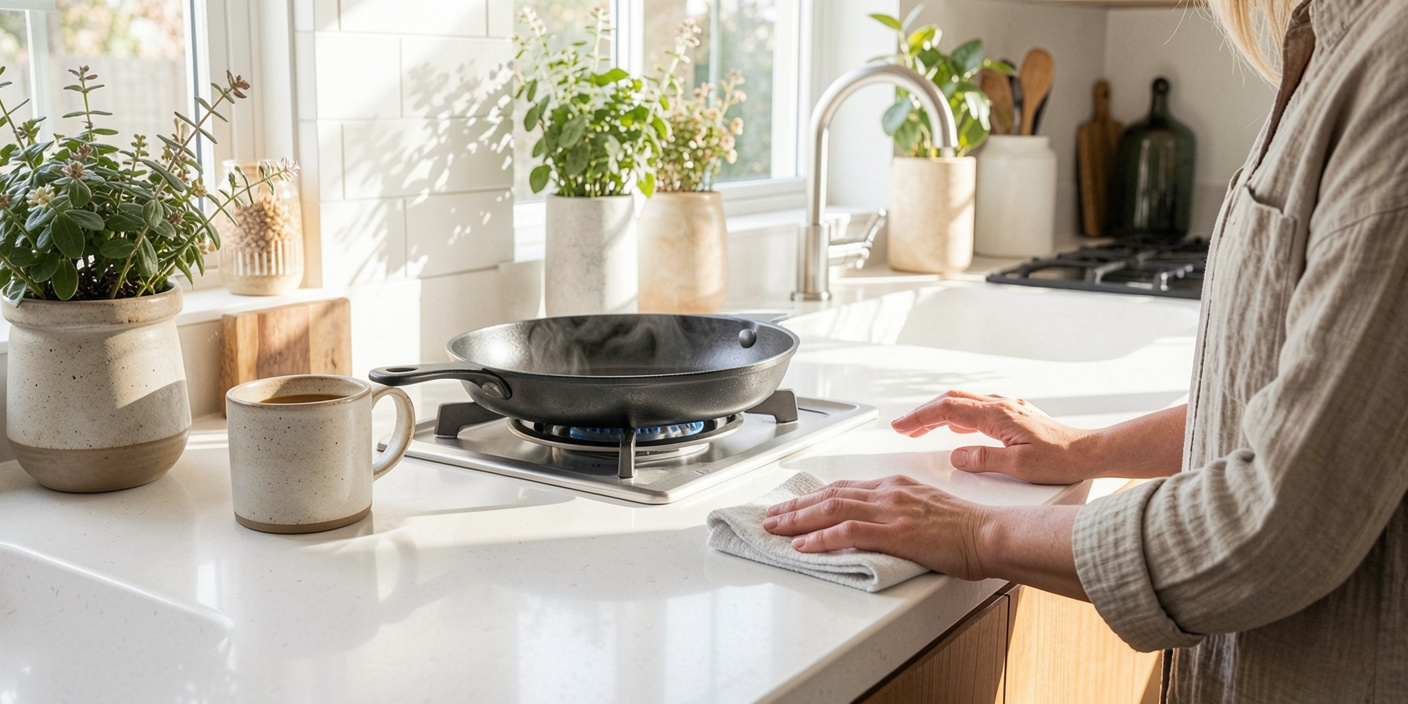
Your countertops put up with a lot every day. From hot pans and food prep to coffee spills and cleaning products, they're one of the hardest-working surfaces in your home. The good news? Most countertop materials are designed to handle daily life—as long as they're cared for correctly.
The key is knowing that every material is a little different. The cleaner that's perfectly safe on quartz could damage marble. The heat that granite can tolerate might leave a permanent mark on laminate.
This guide covers how to clean, protect, and maintain the most popular countertop materials, helping you keep your surfaces looking their best for years to come.
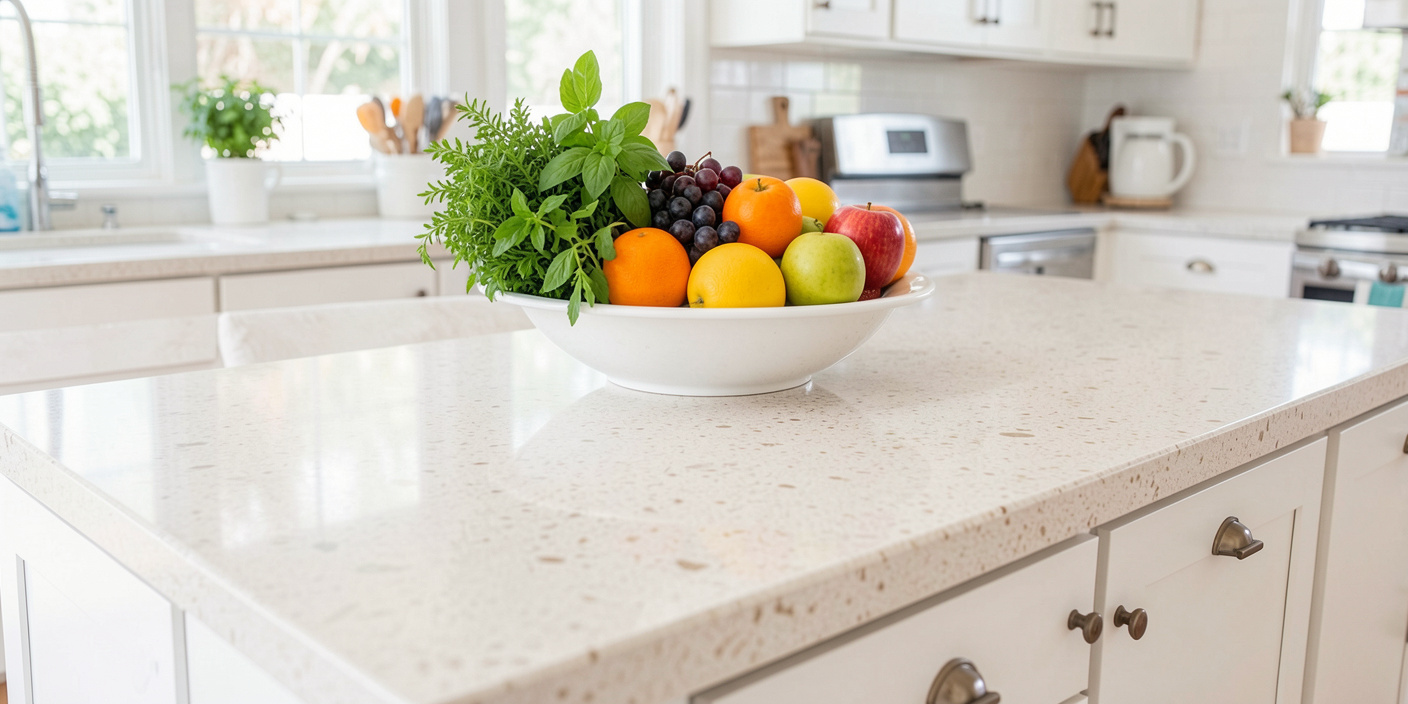
Quartz countertops are engineered stone made by combining natural quartz with resin binders. This manufacturing process creates a non-porous surface that doesn't require sealing and offers excellent resistance to everyday stains.
For regular cleaning, warm water, a soft microfiber cloth, and a few drops of dish soap are all you need. Wipe the surface clean, rinse with fresh water, and dry with a soft cloth to prevent streaks or water spots.
To keep quartz looking its best:
For dried-on food or stubborn coffee and wine stains, use a non-abrasive stone cleaner and wipe gently with a soft cloth.
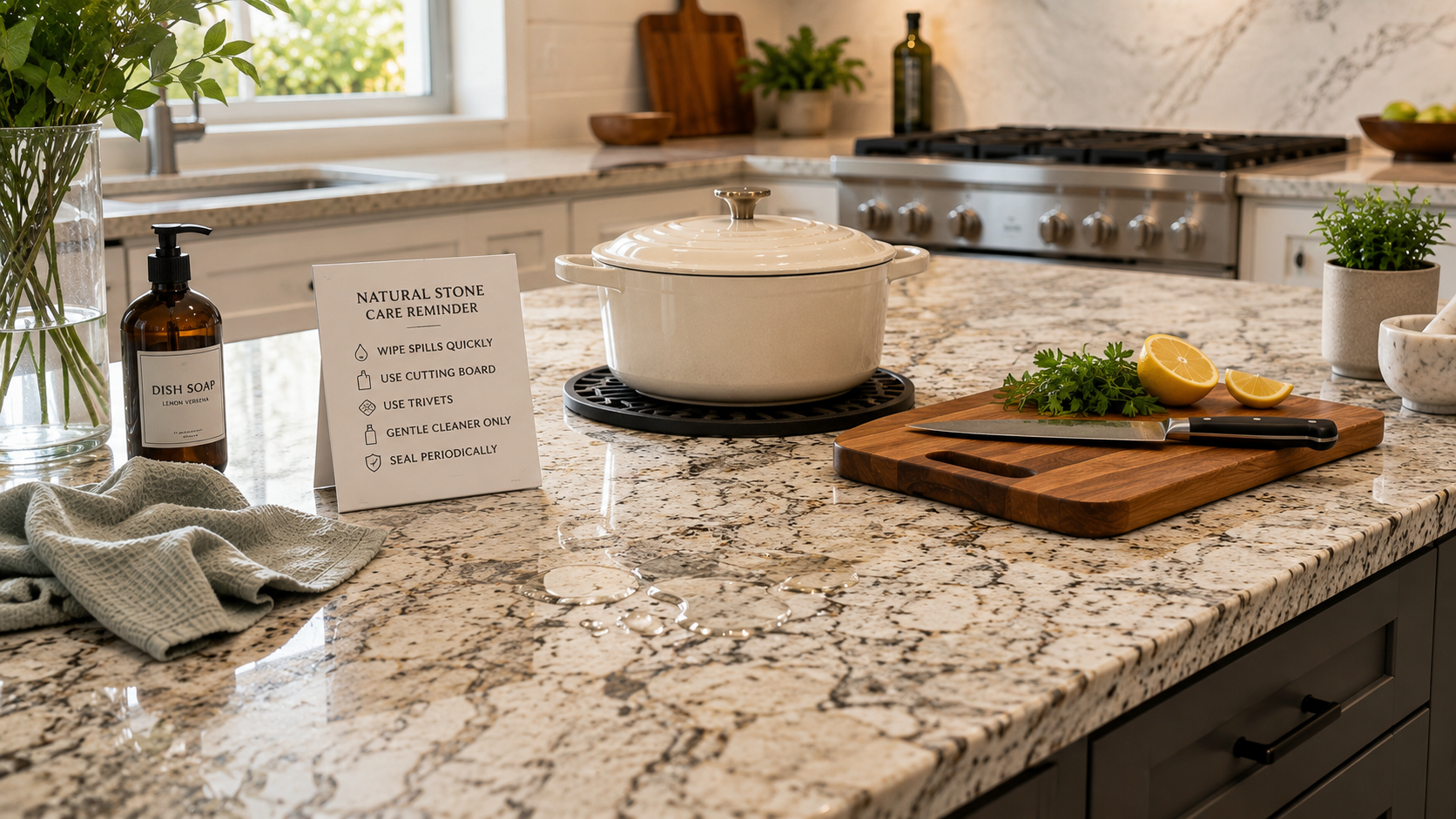
Natural stone countertops including granite, marble, and quartzite are porous surfaces. Liquids can penetrate if left to sit, so the most important habit is to wipe up spills quickly every time.
For regular cleaning, warm water, dish soap, and a soft cloth are all you need. Avoid harsh chemicals and acidic cleaners, which can etch softer stones like marble. Natural stone needs periodic sealing to stay protected. A simple water test tells you when it is time: if water absorbs into the surface instead of beading, reseal. Always use a cutting board and trivets, even though granite is more heat-resistant than quartz.
Marble is prized for its timeless beauty, but it requires a little more care than other countertop materials.
Unlike granite, marble is particularly sensitive to acids. Lemon juice, vinegar, tomatoes, citrus, and wine can all leave dull marks known as etching, even if the stone has been sealed.
To care for marble:
Quartzite is often confused with quartz, but they're completely different materials. Quartzite is a natural stone, while quartz is engineered.
It combines exceptional durability with the look of natural marble. It's highly scratch-resistant and more heat-resistant than quartz, but because it's natural stone, it still requires periodic sealing.
For routine maintenance:
Porcelain countertops have become increasingly popular thanks to their exceptional durability and low maintenance. Large-format porcelain slabs, including many from Daltile, offer the look of natural stone with very little upkeep.
Porcelain is:
Daily cleaning only requires warm water, mild soap, and a soft cloth.
While porcelain is incredibly durable, its edges can chip if struck with heavy cookware, so avoid dropping cast iron pans or other heavy objects onto exposed edges.
Laminate countertops remain a practical, affordable option for many homes. They're easy to clean and available in an enormous range of colors and designs.
To keep laminate looking its best:
Although laminate doesn't require sealing, avoiding excessive moisture helps extend its lifespan.
Wood countertops bring warmth and character to a kitchen but require regular maintenance to stay looking their best.
Unlike stone surfaces, butcher block should be periodically treated with food-safe mineral oil or a manufacturer-approved conditioner to help prevent drying and cracking.
Additional care tips include:
With proper care, butcher block develops a rich appearance that improves with age.
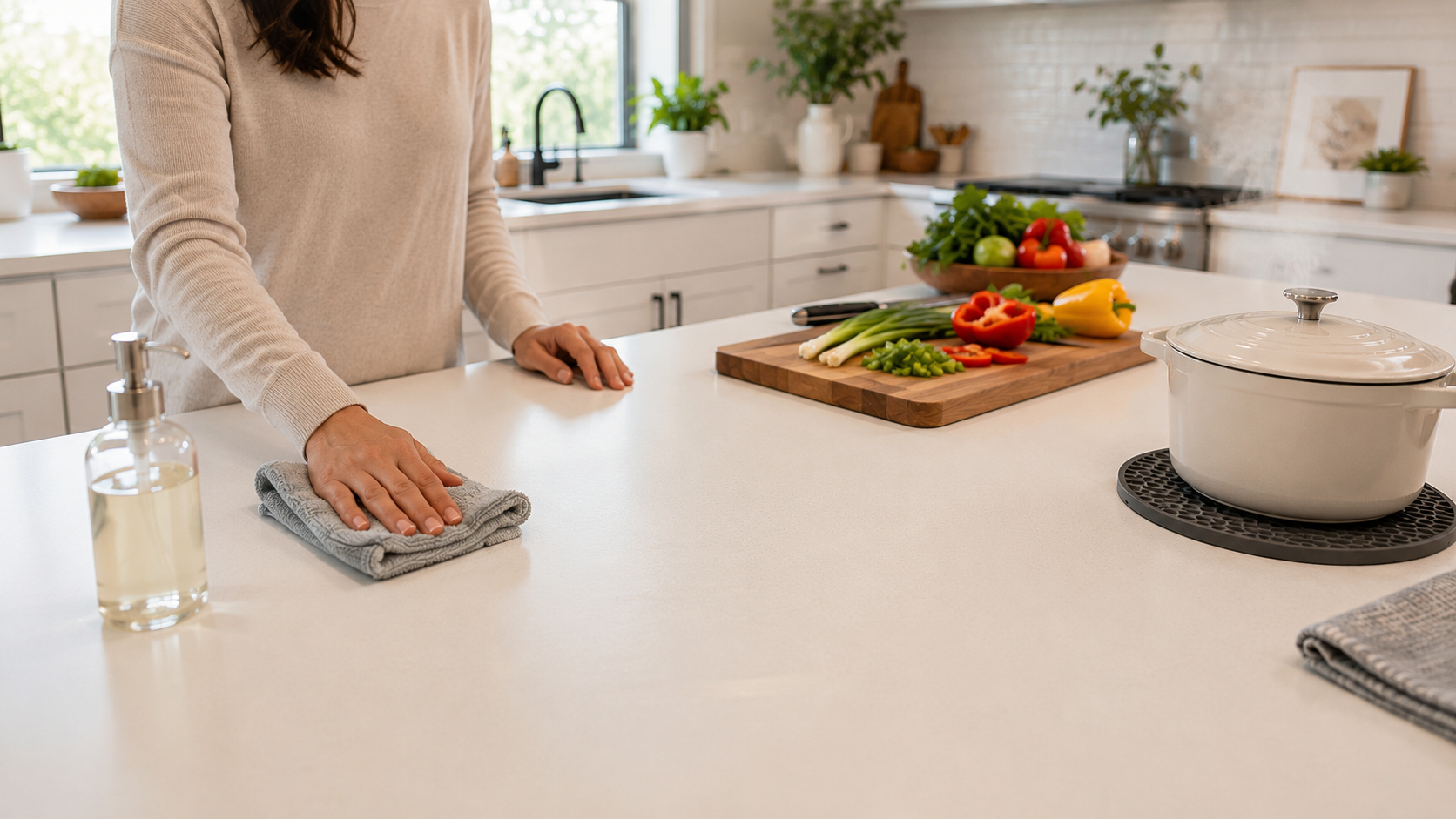
Solid surface countertops are non-porous and practical for busy kitchens. Regular cleaning with dish soap and a soft cloth keeps them in good shape. Avoid harsh chemicals like bleach, which can discolor the surface, and always use trivets since a solid surface is not heat-resistant. One advantage over stone is repairability: minor scratches can often be buffed out.
Regardless of which countertop material you have, these habits will help protect your investment.
Coffee, wine, oils, tomato sauce, and acidic foods become much harder to remove the longer they sit. Immediate cleanup is one of the simplest ways to prevent staining.
Even highly scratch-resistant materials can develop marks over time. Cutting boards protect both your countertop and your kitchen knives.
Heat resistance isn't the same as heat proof. Trivets help prevent thermal shock, discoloration, and long-term wear.
Microfiber cloths effectively remove dirt without dulling polished finishes.
For most countertop materials, mild dish soap and warm water outperform harsh cleaners while preserving finishes and sealants.
Even premium countertops can suffer unnecessary damage from simple everyday habits.
Avoid these common mistakes:
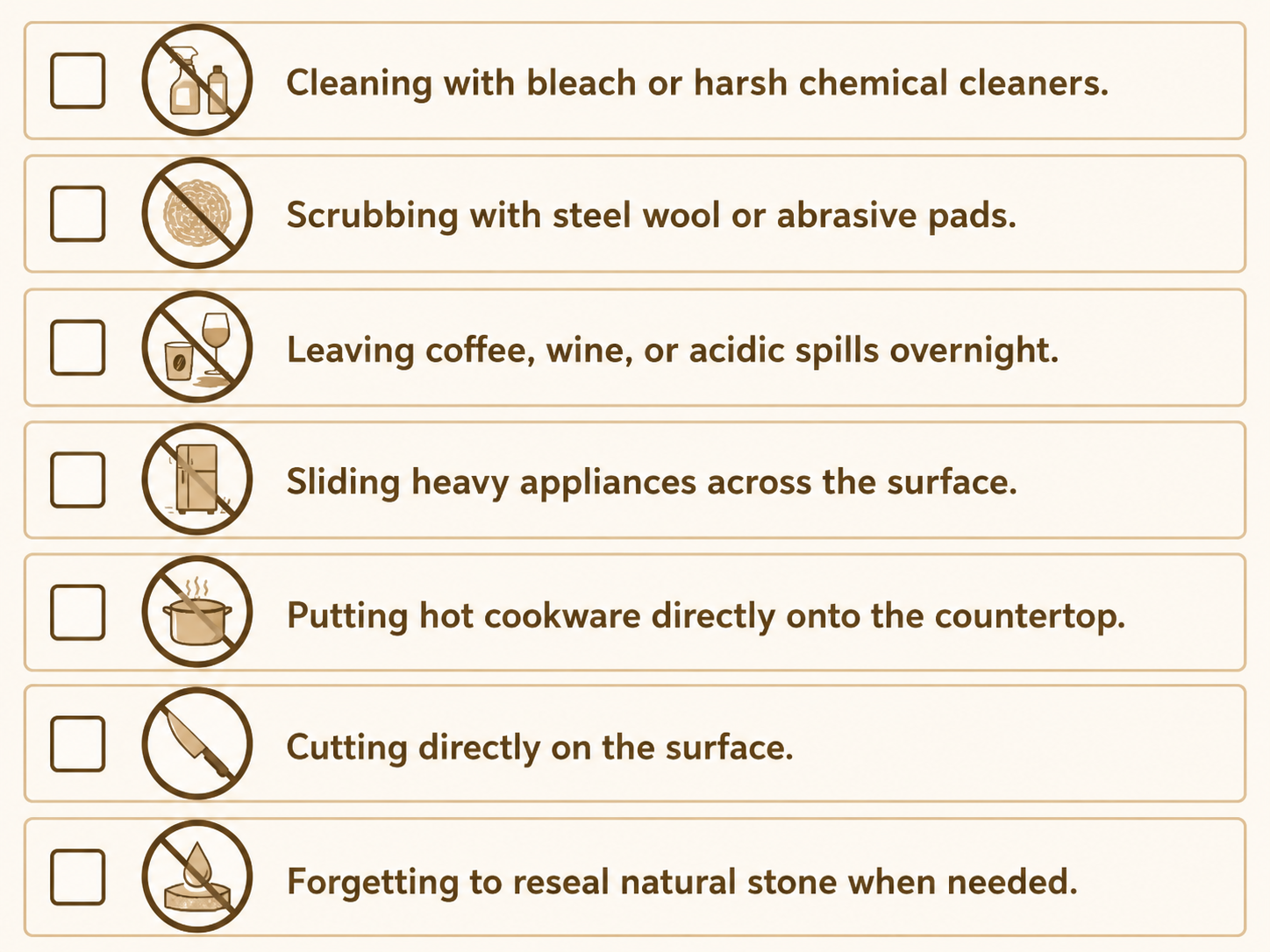
These small habits often have a bigger impact on the lifespan of your countertops than the material itself.
For everyday cleaning, warm water, a few drops of dish soap, and a soft cloth are all you need to clean quartz. For tougher residue like dried food or wine or coffee stains, a non-abrasive stone cleaner applied briefly and wiped away with a soft cloth works well. Avoid bleach, abrasive scrubbers, and placing hot pots directly on the surface.
Yes. Natural stone is a porous surface and needs periodic sealing to stay resistant to staining. How often depends on the stone and usage level. A simple water test tells you when it is time: if water absorbs into the surface rather than beading up, it is time to reseal.
It is not recommended for any countertop surface. Harsh chemicals like bleach can dull finishes on quartz and solid surface, break down sealants on natural stone, and discolor laminate. Dish soap and warm water handle the vast majority of daily cleaning on every countertop type.
Quartz is non-porous and highly stain resistant, but not completely stain-proof. Wipe up spills quickly, particularly pigmented liquids like wine or coffee. Quartz does not require sealing, making it one of the most low-maintenance countertop options available.
Quartz and porcelain are generally the easiest countertop materials to maintain because they're non-porous and don't require sealing. Natural stone surfaces need a little more attention but can last for decades with proper care.
Looking after your countertops doesn't require expensive cleaners or complicated routines. A few simple habits—cleaning spills quickly, protecting surfaces from heat, using cutting boards, and choosing the right cleaning products—can keep almost any countertop looking great for years.
If you are choosing a new countertop or looking for guidance on what material suits your lifestyle, the team at Baker Bros brings real expertise to every conversation. With decades of experience helping Arizona homeowners find surfaces that work for how they actually live, they are a good place to start. Find your nearest Baker Bros showroom and talk to a consultant before you decide.
Reviewed By: Phil Koufidakis, President at Baker Bros Area Rugs and Flooring
Phil Koufidakis has spent more than 25 years helping Arizona homeowners find the right flooring for their homes. As President of Baker Bros Area Rugs and Flooring, he brings decades of hands-on experience and industry knowledge.
Stay informed, get inspired, and be the first to know about promotions – subscribe now!
By subscribing, you agree to our Privacy Policy.

.avif)