4.7
607 Reviews
Flooring Arizona since 1945!
4.7/5


Professional Installation

Educated Consultants

4.7
607 Reviews
4.7/5

New flooring can feel like a big commitment, financially and otherwise. But here is the thing: you do not need to spend a fortune to get a floor that looks good, holds up to daily life, and makes a room feel genuinely different. The affordable flooring options available today are better than ever, in terms of durability, variety, and how convincingly they replicate more expensive materials.
Whether you are refreshing a living room, updating a rental, or tackling the whole house on a tight budget, this guide covers the most practical and budget-friendly flooring choices worth considering.
There is a persistent idea that budget flooring looks cheap. That was more or less true fifteen years ago. It is not anymore. Advances in digital printing and manufacturing have made it possible to produce vinyl and laminate flooring that closely mimics the look of hardwood, stone, and tile at a price point that actually makes sense for most households.
The key is knowing what you are buying and why. Each affordable flooring option has its strengths, and matching the right material to the right room makes all the difference.
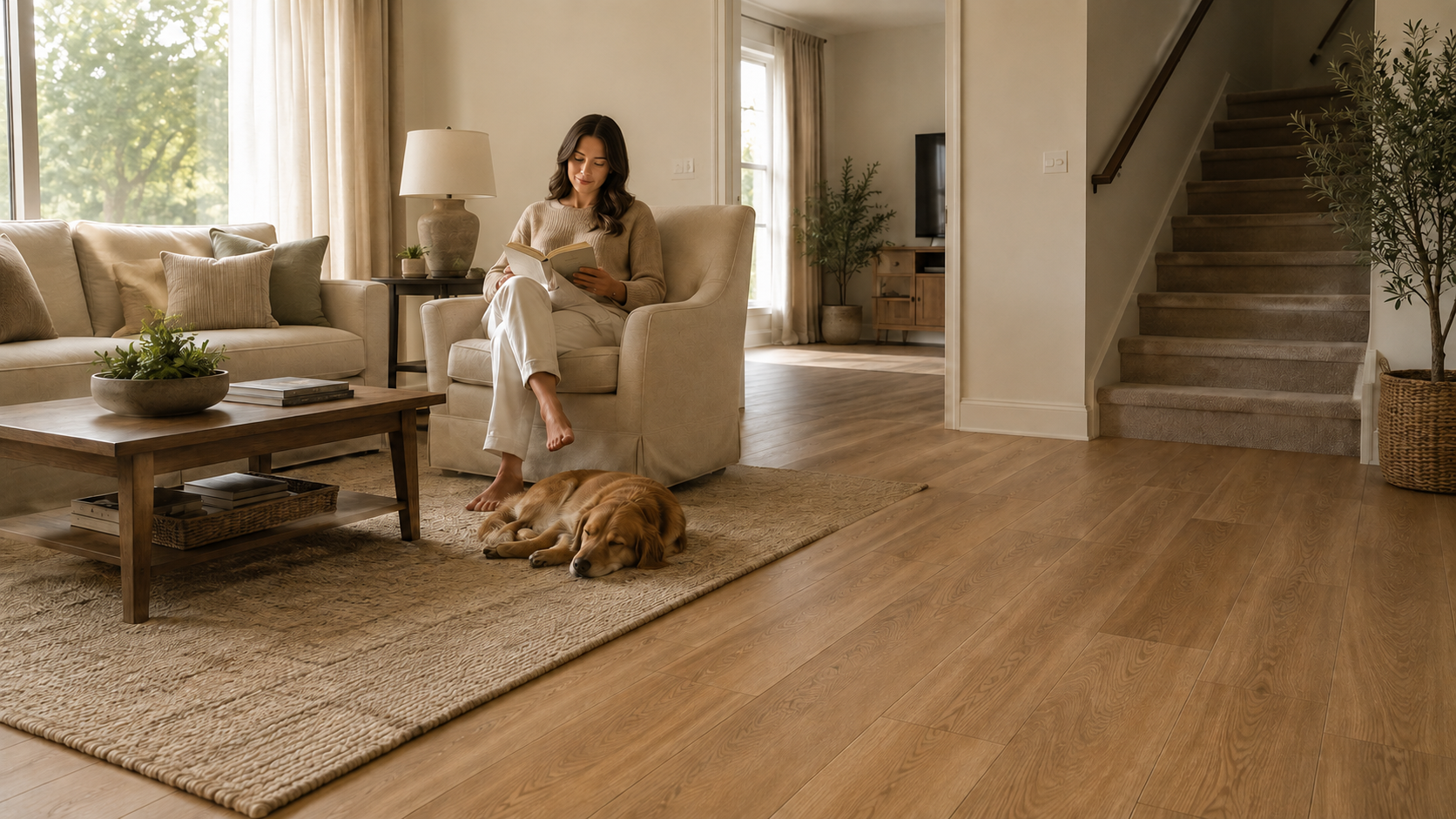
Vinyl flooring is, by almost any measure, the most popular affordable flooring choice right now, and for good reason. It is water-resistant, durable, comfortable underfoot, and available in a range of formats, including sheet vinyl, vinyl tile, and luxury vinyl plank.
Luxury vinyl plank (LVP) deserves particular attention. It looks remarkably similar to real wood, handles moisture far better than hardwood, and costs significantly less per square foot. For kitchens, bathrooms, and living rooms that see a lot of foot traffic, it is hard to find a more practical floor at this price.
Sheet vinyl is the most affordable format and works well in smaller rooms like bathrooms and laundry areas. Vinyl tile sits in the middle, offering the look of stone or ceramic tile at a lower cost and with easier installation.
One thing worth knowing: vinyl flooring quality varies significantly. Thicker wear layers mean better scratch and dent resistance. If you are putting it in a high-traffic area, it is worth spending a little more for a product that will last.
Laminate flooring has come a long way from the flat, plastic-looking floors of the 1990s. Modern laminate uses high-resolution photographic layers to replicate wood and stone with a level of realism that surprises most people when they see it in person.
It is also one of the hardest surfaces in the affordable flooring category. Laminate resists scratches, scuffs, and surface stains better than most natural materials, which makes it a practical choice for households with pets, children, or both.
The main limitation is moisture. Laminate is not waterproof, and prolonged exposure to water can cause it to swell or warp. It is best suited to living rooms, bedrooms, and hallways rather than kitchens or bathrooms unless specifically rated for moisture resistance.
Cost per square foot is competitive with mid-range vinyl, and many laminate products are straightforward to install as a floating floor.
Cork does not get enough attention in the affordable flooring conversation. It is soft underfoot, naturally insulating, resistant to mold and mildew, and made from a genuinely renewable material. It is available as tiles or floating planks, and the price per square foot is competitive with mid-range laminate. It works particularly well in bedrooms, home offices, and playrooms where the softness and acoustic insulation properties are actually felt.
The trade-off is that cork requires sealing and is not the right choice for very wet areas. It can also dent under heavy furniture over time. But for the right space and the right household, it punches well above its price point.
This is the question most homeowners land on, and the honest answer is that it depends on the room.
Both are good floors. Both are significantly more affordable than hardwood or tile. The decision comes down to where the floor is going and what it needs to handle.
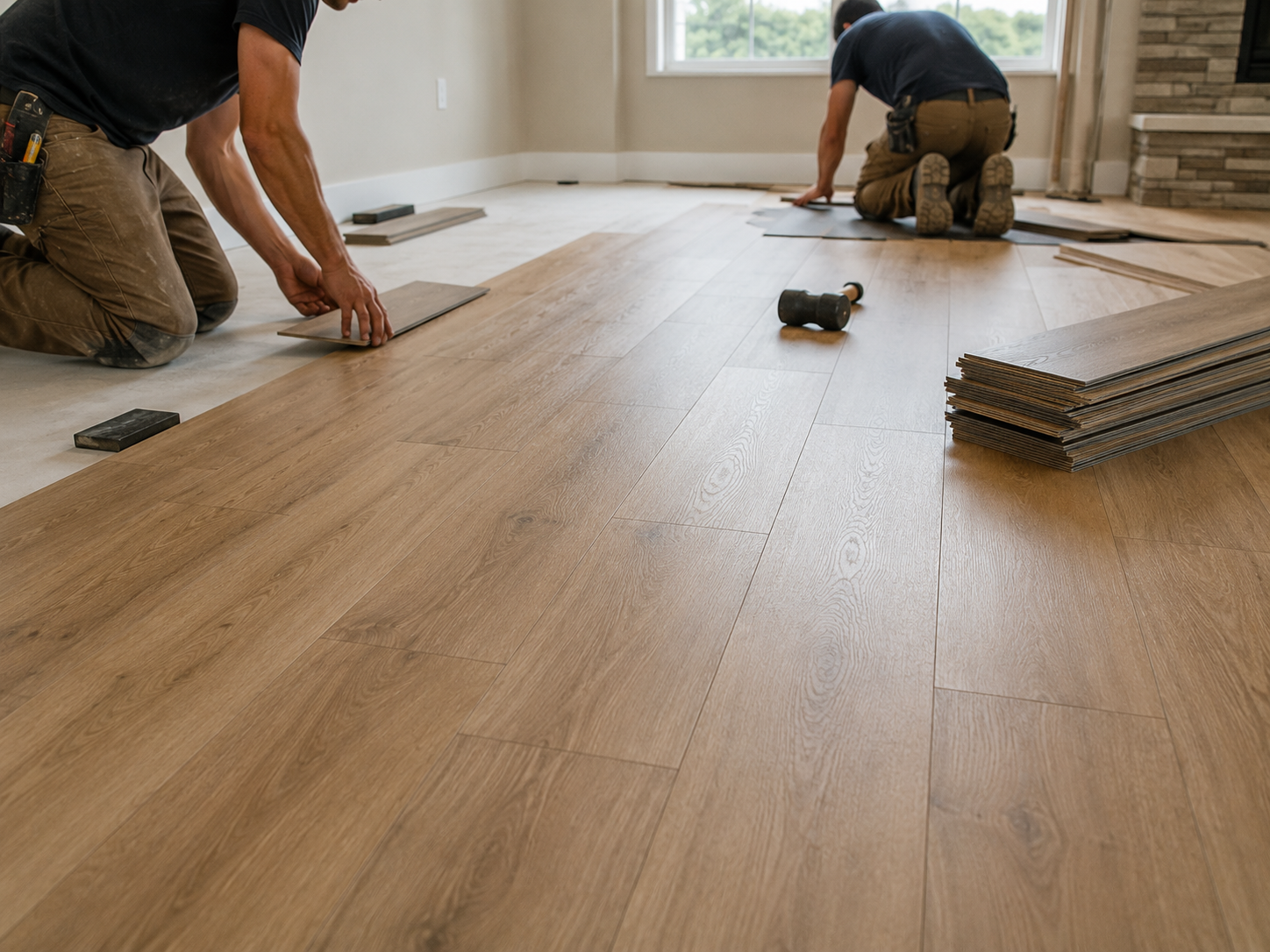
The sticker price of a flooring product is only part of the real cost. A few other things worth factoring in:
Vinyl flooring and laminate flooring are the two most cost-effective options for a living room. Luxury vinyl plank offers realistic wood aesthetics with strong durability. Laminate provides a harder surface with excellent scratch resistance. Both are available at competitive price points and install relatively quickly.
Both are strong, budget-friendly choices, but for different rooms. Vinyl flooring is better suited to moisture-prone areas. Laminate performs well in dry living spaces and tends to be harder and more scratch-resistant. If you are choosing for a single room, match the material to the conditions of that space.
Cork flooring is genuinely affordable and often overlooked. It is eco-friendly, soft underfoot, and a natural insulator. It costs slightly more per square foot than entry-level vinyl or laminate but offers qualities those materials cannot replicate, particularly in terms of comfort and acoustic insulation.
Budget-friendly does not have to mean settling. The right affordable flooring option, installed well and matched to your lifestyle and your space, can look and perform better than flooring that costs twice as much but was chosen without enough thought.
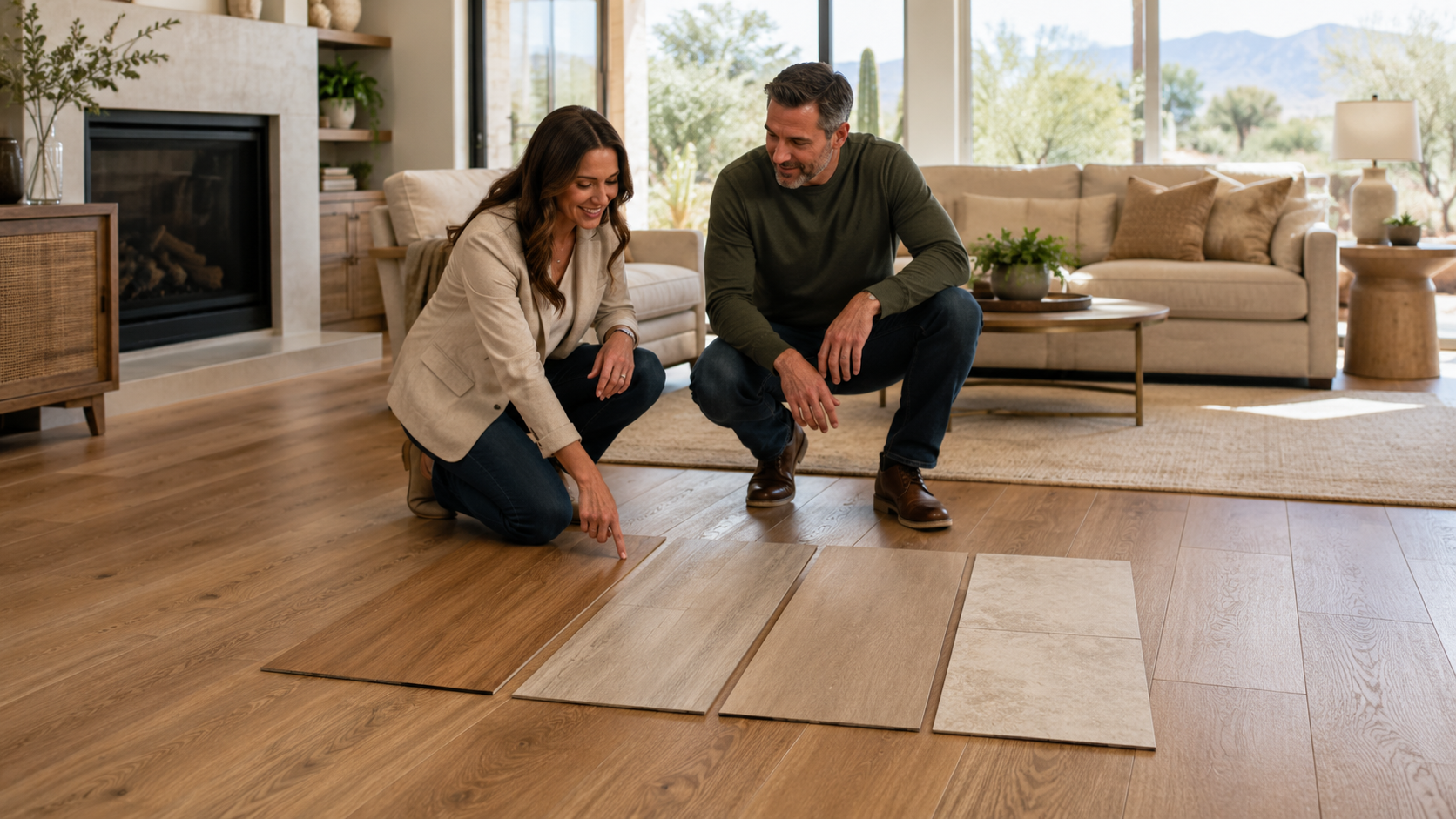
Baker Bros carries a wide range of vinyl flooring, laminate, and other affordable flooring options across six Arizona showroom locations. The team there can help you compare materials side by side, understand what installation really costs, and find the best value for your specific project.
Visit your nearest showroom or get in touch to talk through your options before you commit.
Reviewed By: Phil Koufidakis, President at Baker Bros Area Rugs and Flooring
Phil Koufidakis has spent more than 25 years helping Arizona homeowners find the right flooring for their homes. As President of Baker Bros Area Rugs and Flooring, he brings decades of hands-on experience and industry knowledge.
Stay informed, get inspired, and be the first to know about promotions – subscribe now!
By subscribing, you agree to our Privacy Policy.

.avif)